Between March and May, enquiries all arrive at once, by text, WhatsApp, email and form, while you are in a garden. What to prepare in January, sorting rules that serve your maintenance clients first, what an assistant can receive — and why a good system also helps you say no.
ChatGPT is often enough for writing and thinking. A private assistant keeps your clients’ context, works in your tools through limited access and keeps a log. Three questions to choose, keys rather than instructions, and what each option costs.
Rebuilding your website is not always the right answer. A thirty-minute test to decide, what changes with the platform, and the step redesigns skip most often: recording what works and redirecting the old addresses, so you do not lose the visits Google used to send you.
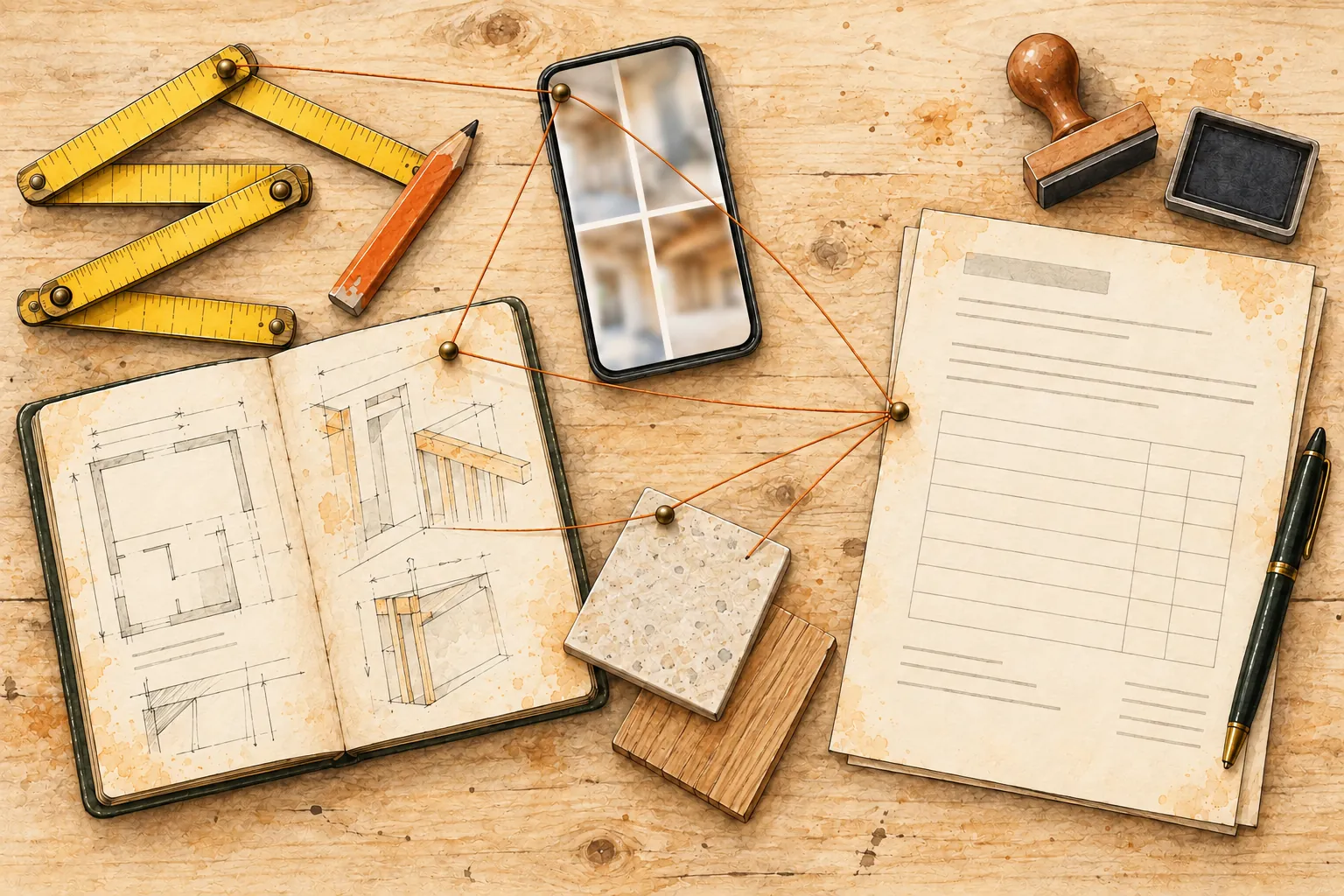
Between the visit and the quote, the context gets lost: mixed-up photos, measurements on a scrap of paper, what the client said forgotten. What you can set up yourself, what an assistant prepares from your prices — never invented prices — and what stays with you: measurements, technical choice, final price, sending.
Session notes, an insurance report, a patient’s message: none of it goes into a consumer assistant. What is about no one, yes. Three zones, an anonymisation checklist, the settings to check — and the point where you need a supervised tool rather than a personal account.
Between 900 and 3,500 francs for the same “brochure site”: the offers are not talking about the same thing. Four ways to get a website, what makes the price vary, the costs that come back every year — and the five questions that finally make two quotes comparable.
A payment reminder does not need AI: it needs a written due date, a fixed schedule and three messages written once. What your software already does, what an assistant can prepare, what Swiss law says about reminders — and when it is better to call.
On a “trade + town” search, the Google profile shows up before your website. Category, address, services, photos, reviews: a checklist you can follow yourself in two hours — and how to reply to a review without ever confirming that someone consulted you.
The model is a capability. The harness is a commodity. The method — framing the work, guaranteeing the result — is the craft. For a Swiss SME, the tool can change. The thread, the gates and the last word cannot.
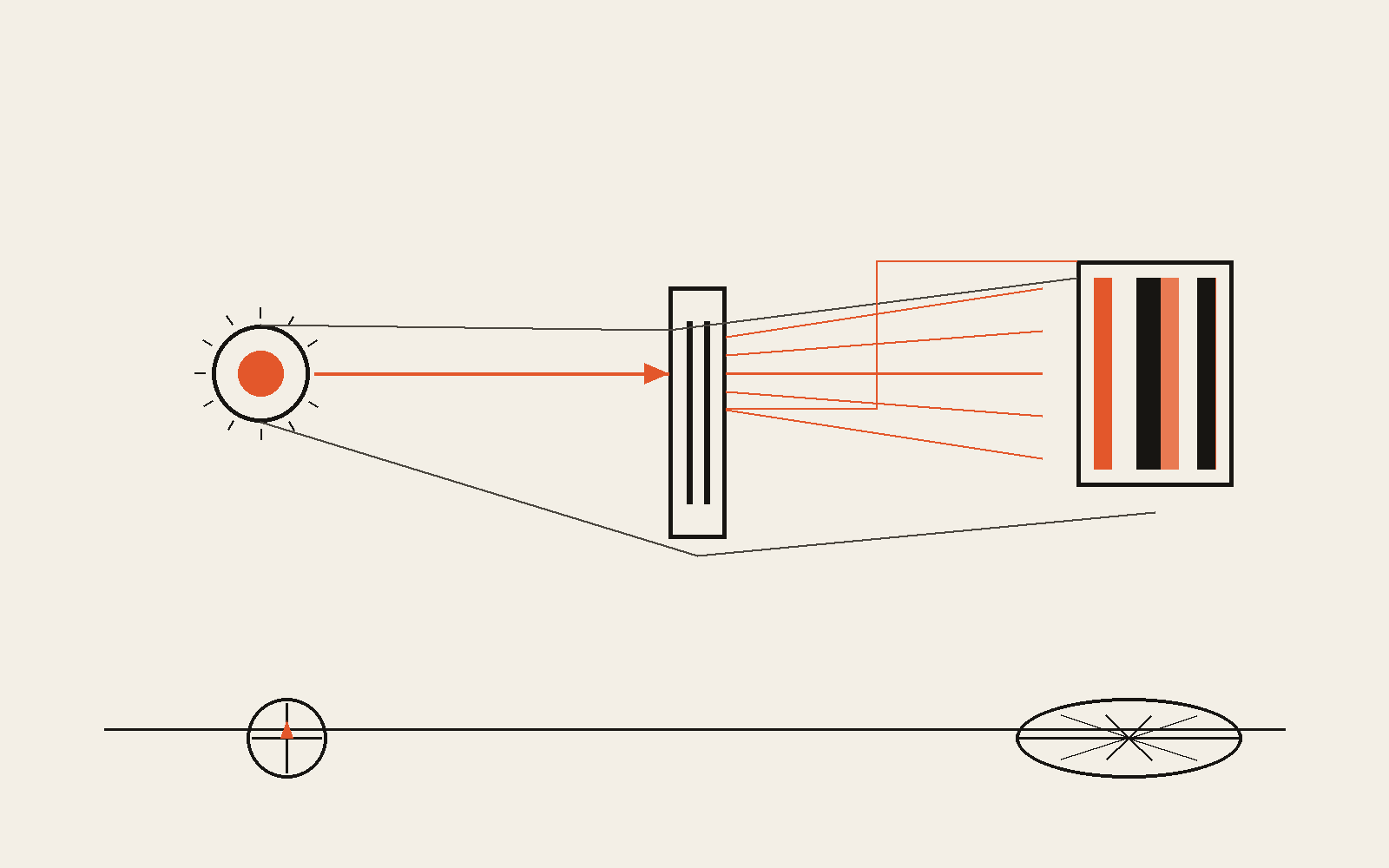
The two-slit experiment is told as proof that mind makes the world. We read it differently: a revealer of apparatus. Hence the name Agentic Realism — a declared borrowing from Karen Barad’s agential realism, turned into a design rule.
He asked whether there was something he should do differently. A complement, not a correction: occupy Earth as well — soils, cultures, biodiversity, and a peace table that no bloc owns.
If we cannot control the child-AI, the question is no longer the spectacle: what values do we put in it? Truth and curiosity are not enough without soils, cultures and the living.
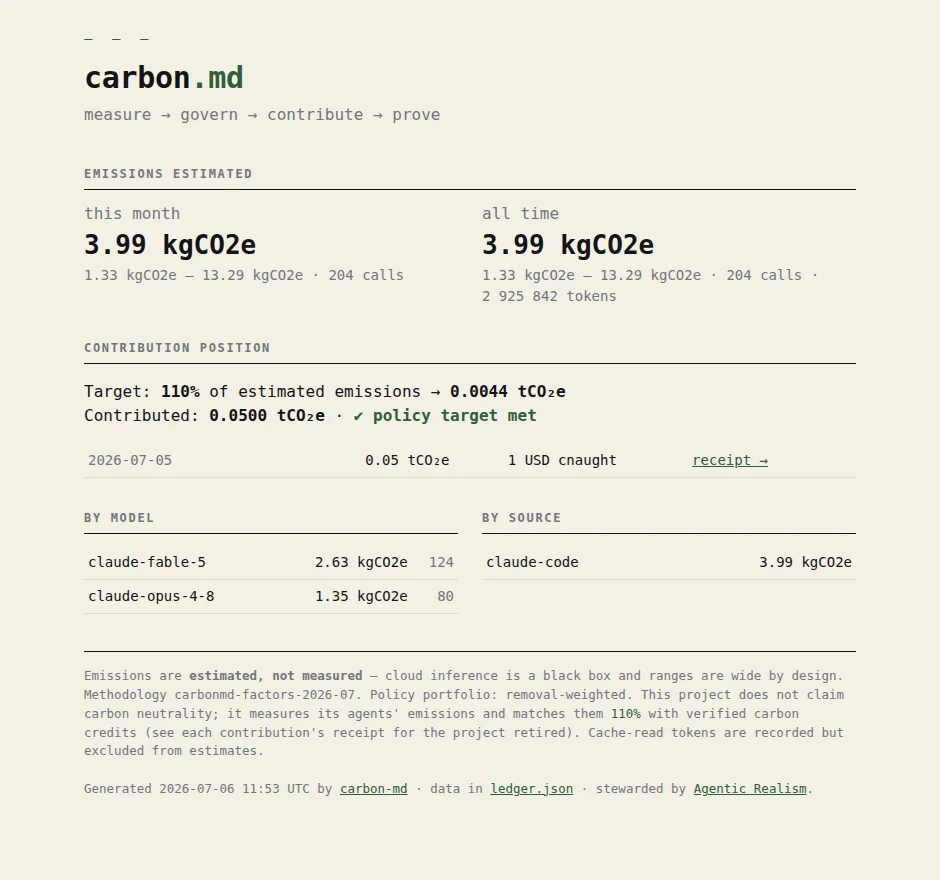
carbon.md connects agent consumption to human policy, versioned memory and verifiable traces. An Agentic Realism reading: measure, govern, contribute and prove without the theatre of neutrality.
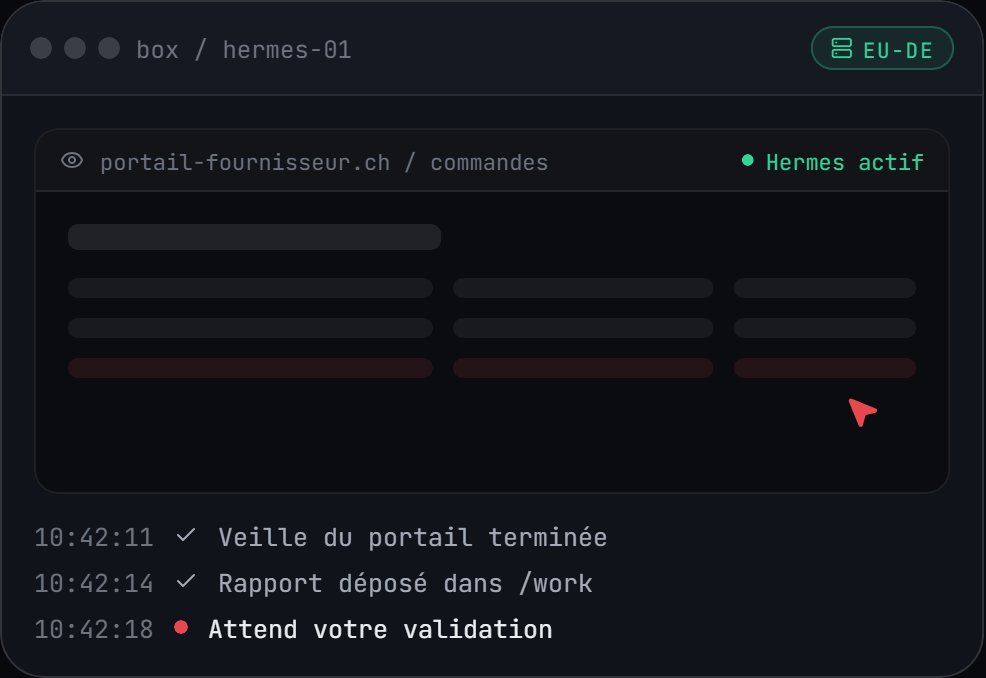
An agent that truly works needs context, boundaries and human takeover. What Grok Bot makes visible — and why AlpenDock should only be used when an isolated workspace creates real value.
Privacy, GDPR and sovereignty are not badges. They are architectural choices: what enters a system, who reaches it, what leaves it and how we regain agency.
Our cultural traces live in silos. Agentic cultural reclamation helps connect what we choose to keep, with explicit boundaries and real rights over our context.
Searching for “openclaw agent”, “hermes agent” or “ai agent”? A pragmatic comparison, self-hosting on a Swiss VPS, and the role of an integrator (living context, not just a tutorial).
We say the human interacts with AI. Karen Barad proposes intra-action: entities constitute themselves in the relation. Consequences for designing apparatuses, not chatbots.